
Puja & Rituals
Published on 17 November 2026•5 min read
Tulsi Vivah 2026: Date, Shubh Muhurat, Puja Vidhi & Complete Samagri List
Tulsi Vivah 2026 will be celebrated on Saturday, 21 November 2026, on Kartika Shukla Dwadashi. This sacred Hindu festival marks the ceremonial marriage of Goddess Tulsi with Lord Vishnu, who is commonly represented by a Shaligram Shila or an idol of Lord Krishna. The occasion holds special importance as it marks the end of Chaturmas and the traditional beginning of the Hindu wedding season.
ॐ
NamanKart Editorial Team
Vedic Research & Temple Traditions
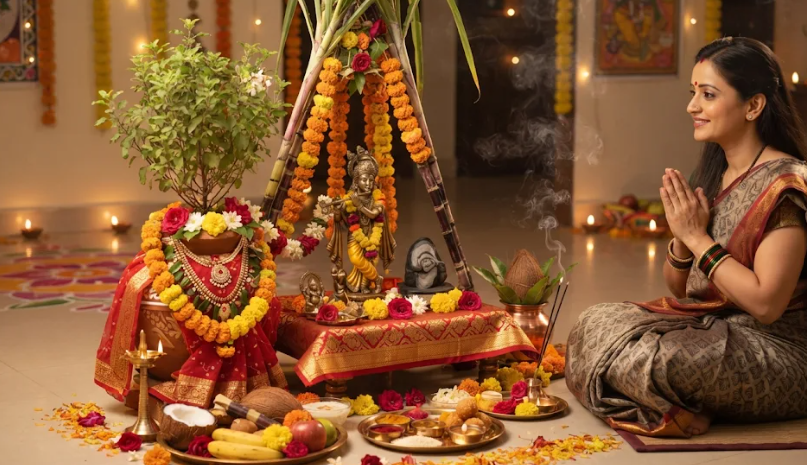
Tulsi Vivah 2026 will be celebrated on Saturday, 21 November 2026, on Kartika Shukla Dwadashi. This sacred Hindu festival marks the ceremonial marriage of Goddess Tulsi with Lord Vishnu, who is commonly represented by a Shaligram Shila or an idol of Lord Krishna. The occasion holds special importance as it marks the end of Chaturmas and the traditional beginning of the Hindu wedding season.
Whether you are celebrating for the first time or following a family tradition, having the right preparations makes the occasion easier. From understanding the auspicious timing to arranging puja essentials, this guide covers everything you need to know about Tulsi Vivah 2026, including its significance, katha, complete samagri list, step-by-step rituals, mantras and decoration ideas for celebrating at home.
Tulsi Vivah 2026 Date, Day and Tithi
Tulsi Vivah will take place on 21 November 2026 (Saturday), according to the commonly followed Kartika Shukla Dwadashi observance.
The festival is celebrated during the Shukla Paksha of the Kartik month, usually around Dev Uthani Ekadashi. Dev Uthani Ekadashi marks the traditional awakening of Lord Vishnu after his four-month period of cosmic rest, known as Chaturmas.
Although many households celebrate Tulsi Vivah on Dwadashi, some families perform the wedding rituals on the evening of Dev Uthani Ekadashi itself. Both practices are followed according to regional and family traditions.
Festival Detail | Information |
Festival | Tulsi Vivah 2026 |
Date | 21 November 2026 |
Day | Saturday |
Hindu Month | Kartik |
Paksha | Shukla Paksha |
Tithi | Dwadashi |
Previous observance | Dev Uthani Ekadashi, 20 November 2026 |
Tulsi Vivah kab hai 2026?
Tulsi Vivah will be observed on Saturday, 21 November 2026. However, devotees whose family traditions follow Ekadashi may perform the ceremony on the evening of 20 November.
Tulsi Vivah 2026 Shubh Muhurat and Puja Time
The evening is traditionally preferred for Tulsi Vivah, especially during Godhuli Vela. This period refers to the time around sunset and is considered auspicious for performing wedding-related rituals.
According to Drik Panchang, the Dwadashi tithi timings for New Delhi are:
Panchang Detail | Date and Time |
Dwadashi Tithi Begins | 21 November, 6:31 AM |
Dwadashi Tithi Ends | 22 November, 4:56 AM |
Godhuli Vela | 5:25 PM – 5:52 PM |
Festival Date | Saturday, 21 November 2026 |
Important: The Dwadashi tithi duration and the actual puja muhurat are different. The tithi indicates the lunar day, whereas Godhuli Vela is an auspicious evening period used for the wedding ceremony.
The timings above are for New Delhi. Sunset and Godhuli timings differ across cities, so devotees should check their local panchang before beginning the rituals.
Families following the Ekadashi tradition can also perform the ceremony on 20 November, according to their customary practice.
What Is Tulsi Vivah and Why Is It Celebrated?
Tulsi Vivah is a traditional Hindu ceremony in which the sacred Tulsi plant is symbolically married to Lord Vishnu. The groom is generally represented by a Shaligram Shila, a sacred form associated with Lord Vishnu, or an idol of Lord Vishnu or Shri Krishna.
Tulsi holds a special place in Hindu households, particularly among devotees of Lord Vishnu. The plant is traditionally worshipped every day, and its leaves are commonly offered during Vishnu and Krishna puja.
The festival carries several religious and cultural meanings:
1. The Sacred Union of Tulsi and Vishnu
The ceremony celebrates the divine marriage of Goddess Tulsi and Lord Vishnu. Devotees recreate a traditional Hindu wedding with decorations, offerings, garlands and other customary rituals.
2. The End of Chaturmas
Chaturmas is a four-month period associated with Lord Vishnu's cosmic rest. Dev Uthani Ekadashi marks his traditional awakening, and Tulsi Vivah follows as an important occasion in the festive calendar.
3. Beginning of the Wedding Season
In many Hindu communities, the period following Tulsi Vivah is considered suitable for resuming traditional wedding ceremonies. This makes the festival particularly significant for families.
4. The Importance of Kanyadaan
Some households perform Tulsi Kanyadaan, symbolically giving Goddess Tulsi in marriage to Lord Vishnu. This ritual reflects the customs of a traditional Hindu wedding and is considered an important devotional offering.
For devotees, Tulsi Vivah is an occasion to express gratitude, seek divine blessings and celebrate the spiritual importance of Tulsi in everyday worship.
Tulsi Vivah Katha – The Story of Vrinda and Lord Vishnu
The story of Tulsi Vivah is associated with Vrinda, a devoted woman whose faith and commitment played an important role in the divine events surrounding Lord Vishnu and the demon king Jalandhar.
According to a commonly narrated version of the katha, Jalandhar was a powerful asura whose strength was protected by the devotion and chastity of his wife, Vrinda. Her unwavering faith was believed to make him nearly invincible.
As Jalandhar's power grew, he became a threat to the gods. Unable to defeat him through ordinary means, the gods approached Lord Vishnu for help.
Lord Vishnu intervened by taking the appearance of Jalandhar and approaching Vrinda. Believing him to be her husband, Vrinda's devotion was disturbed, which weakened the protection that had been sustaining Jalandhar. The gods subsequently defeated him.
When Vrinda discovered what had happened, she was deeply hurt and cursed Lord Vishnu to become a stone. This is associated with the origin of the sacred Shaligram form worshipped by Vishnu devotees.
Vrinda later gave up her physical form. According to the traditional account, Lord Vishnu blessed her and she became the sacred Tulsi plant. He also promised to accept Tulsi leaves in worship.
The divine union of Tulsi and Vishnu is commemorated every year through Tulsi Vivah.
Different scriptures and regional traditions narrate certain details of this story differently, but the central association between Vrinda, Tulsi and Lord Vishnu remains important in the festival.
Tulsi Vivah Samagri List – Complete Puja Items Checklist
Preparing the required items beforehand makes the ceremony more organised, especially when several wedding rituals are performed at home.
The following Tulsi Vivah samagri list covers commonly used items. Some ingredients and decorations may differ depending on regional customs and family traditions.
1. Main Deities and Puja Setup
Tulsi plant in a pot or Vrindavan.
Shaligram Shila or a Vishnu/Krishna idol.
Two small chowkis or platforms.
Clean red or yellow cloth for the platforms.
Tulsi plant in a pot or Vrindavan.
Shaligram Shila or a Vishnu/Krishna idol.
Two small chowkis or platforms.
Clean red or yellow cloth for the platforms.
The Tulsi plant represents the bride, while Shaligram or the accepted form of Lord Vishnu represents the groom. Families that already worship a Shaligram should continue following their established tradition.
For households that use a Krishna idol, an optional choice is the Brass Krishna with Flute (5 inch). The use of an idol depends on family custom; purchasing one is not a ritual requirement.
2. Mandap and Decoration Items
Four sugarcane stalks, where customary.
Red or yellow decorative cloth.
Fresh flowers and flower garlands.
Banana leaves or mango-leaf toran.
Rangoli colours or flower petals.
Decorative threads.
Four sugarcane stalks, where customary.
Red or yellow decorative cloth.
Fresh flowers and flower garlands.
Banana leaves or mango-leaf toran.
Rangoli colours or flower petals.
Decorative threads.
Sugarcane stalks are traditionally used to create a small wedding mandap around the Tulsi plant.
3. Tulsi Shringar Items
Red chunri or small sari.
Bindi.
Sindoor.
Bangles.
Mehndi.
Flowers and jewellery, according to family custom.
Red chunri or small sari.
Bindi.
Sindoor.
Bangles.
Mehndi.
Flowers and jewellery, according to family custom.
These items are used to decorate Tulsi as a bride. Every household does not necessarily use all sixteen traditional shringar items.
4. Puja and Wedding Ritual Items
Haldi.
Roli or kumkum.
Akshat (unbroken rice grains).
Chandan.
Mauli or Kalava.
Gangajal or clean water.
Panchamrit, where customary.
Paan and supari, where used.
Haldi.
Roli or kumkum.
Akshat (unbroken rice grains).
Chandan.
Mauli or Kalava.
Gangajal or clean water.
Panchamrit, where customary.
Paan and supari, where used.
These are commonly used during the initial worship and wedding rituals.
For tilak preparation, you can also keep Ashtagandh Tilak Powder with your other puja essentials.
5. Lighting and Aarti Items
Brass or other traditional diya.
Ghee or oil.
Cotton wicks.
Dhoop or incense sticks.
Camphor.
Bell.
Aarti thali.
Brass or other traditional diya.
Ghee or oil.
Cotton wicks.
Dhoop or incense sticks.
Camphor.
Bell.
Aarti thali.
A well-arranged thali helps keep the essential items together during worship. The Brass Puja Thali Set (9 piece) includes a thali, diya, kalash, bell, agarbatti stand, kumkum bowls and spoon.
You can also arrange Sandal Dhoop Sticks for the worship area.
An Akhand Jyot Diya is another option for households that follow the tradition of maintaining an uninterrupted sacred flame. An akhand jyot is not compulsory for every Tulsi Vivah ceremony.
6. Bhog and Seasonal Offerings
Fresh fruits.
Coconut.
Sugarcane pieces.
Sweets or kheer.
Amla.
Ber.
Singhara, where locally customary.
Other seasonal fruits and produce.
Fresh fruits.
Coconut.
Sugarcane pieces.
Sweets or kheer.
Amla.
Ber.
Singhara, where locally customary.
Other seasonal fruits and produce.
The offerings vary according to local availability and family practice. There is no single fixed fruit list that every household must follow.
7. Wedding Completion Items
Wedding garlands.
Gathbandhan thread.
Aarti and prasad.
Dakshina, where customary.
Wedding garlands.
Gathbandhan thread.
Aarti and prasad.
Dakshina, where customary.
Preparation tip: Keep the items arranged in separate groups before the ceremony. This saves time and makes it easier to follow the rituals without repeatedly searching for ingredients.
Tulsi Vivah Puja Vidhi at Home – Step-by-Step Ritual
Tulsi Vivah can be performed at home with a simple arrangement and the necessary puja items. The following is a general sequence of rituals. If your family priest follows a different order, give preference to that tradition.
Step 1: Clean the Puja Area and Prepare Tulsi
Begin by cleaning the area around the Tulsi plant. Tidy the pot or Vrindavan and place it on a clean platform. Ensure that the plant is healthy and properly positioned for the ceremony.
Step 2: Prepare the Groom's Place
Place the Shaligram Shila or the Vishnu/Krishna representation used by your family on a separate chowki. Cover the platform with a clean cloth and arrange the necessary worship items nearby.
Step 3: Create and Decorate the Mandap
Arrange sugarcane stalks around the Tulsi plant to create a small mandap, if this is part of your tradition. Decorate the area with flowers, leaves and red or yellow fabric.
Drape a red chunri around the Tulsi plant to represent the bride.
Step 4: Perform the Initial Puja
Begin by worshipping Lord Ganesha according to your household practice. Then offer prayers to Goddess Tulsi and Lord Vishnu.
Offer water, flowers, roli, akshat, chandan and other customary items while chanting the relevant mantras.
Step 5: Perform Tulsi Shringar
Decorate the Tulsi plant with a chunri, bindi, bangles and other traditional adornments. Apply a tilak to the groom deity and offer cloth or other customary items.
Step 6: Perform the Wedding Rituals
Once the preparations are complete, perform the symbolic wedding ceremony.
Exchange garlands between Tulsi and the groom representation. Tie the symbolic gathbandhan using a sacred thread or cloth. Perform the traditional circumambulations or pheras according to the family's practice.
The exact number and sequence of wedding rites can vary, so avoid assuming that every household follows the same procedure.
Step 7: Recite the Tulsi Vivah Katha and Offer Bhog
Read or listen to the Tulsi Vivah katha. Offer fruits, sweets, coconut or other customary bhog to the deities.
Family members can participate in the prayers and chanting.
Step 8: Perform Aarti and Distribute Prasad
Conclude the ceremony with Tulsi Mata and Lord Vishnu aarti. Offer prayers for the well-being of the family and distribute prasad among everyone present.
How to Perform a Simple Tulsi Vivah at Home in a Small Space
You do not need a large courtyard or an elaborate mandap to celebrate Tulsi Vivah. A balcony, terrace, courtyard or clean corner of your home can be suitable, depending on the space available and the care requirements of your Tulsi plant.
Here are a few practical suggestions:
Use a compact setup: Place the Tulsi pot on a clean platform and arrange the groom deity on a smaller chowki beside it.
Keep decorations minimal: Use a red chunri, a small flower garland and a few decorative elements.
Arrange essential items together: Keep the diya, flowers, kumkum, rice and other puja ingredients on one thali.
Choose a simple mandap: If sugarcane stalks are unavailable, create a decorative canopy using suitable reusable materials. This is a practical decoration choice, not a compulsory ritual substitute.
Involve family members: Assign small responsibilities such as arranging flowers, preparing offerings or reading the katha.
If you are performing the ceremony indoors or on a balcony, keep burning diyas and incense away from curtains, fabric, dry flowers and other flammable materials. Never leave an open flame unattended.
Tulsi Vivah Decoration Ideas for Home
A beautifully decorated Tulsi mandap adds to the festive atmosphere. Whether you prefer a traditional wedding arrangement or a simple home setup, a few thoughtful decorations can make the ceremony special.
1. Traditional Sugarcane Mandap
Create a small mandap around the Tulsi plant using sugarcane stalks. Decorate the structure with flowers and traditional fabric to give it the appearance of a wedding pavilion.
2. Marigold and Flower Decoration
Use marigold garlands, roses and fresh flower petals around the Tulsi platform. You can also create a small floral rangoli at the entrance of the puja area.
3. Red and Yellow Fabric Theme
Red and yellow are commonly used for festive and wedding decorations. Drape these colours around the mandap or use them as decorative backdrops.
4. Traditional Rangoli
Create a rangoli using flower petals or traditional rangoli colours around the Tulsi platform. Keep the design simple so that the puja area remains accessible.
5. Diya Decoration
Arrange a few diyas around the mandap to create a warm devotional atmosphere. Ensure that lamps are placed on stable, heat-resistant surfaces and away from fabric and dry decorations.
6. Budget-Friendly Decoration
If you prefer a simple celebration, use flowers from your garden, reusable cloth decorations and a few diyas. Natural and locally sourced materials can make the setup attractive without requiring a large budget.
Tulsi Vivah Mantra and Aarti
Mantra chanting is an important part of worship during Tulsi Vivah. Devotees generally chant prayers dedicated to Goddess Tulsi and Lord Vishnu while performing the rituals.
Here are two simple mantras that can be included in the worship.
1. Tulsi Mata Mantra
ॐ तुलस्यै नमः।
Transliteration: Om Tulasyai Namah.
Meaning: Salutations to Goddess Tulsi.
This mantra can be chanted while offering flowers and prayers to the Tulsi plant.
2. Lord Vishnu Mantra
ॐ नमो भगवते वासुदेवाय।
Transliteration: Om Namo Bhagavate Vasudevaya.
Meaning: Salutations to Lord Vasudeva, a name of Lord Vishnu.
Devotees can chant this mantra while worshipping the groom deity.
Tulsi Mata and Vishnu Aarti
The ceremony is generally concluded with aarti dedicated to Tulsi Mata and Lord Vishnu. Families can follow the aarti traditionally sung in their household or local temple.
If you are performing the ceremony for the first time, you can ask a family elder or priest to guide you through the appropriate prayers.
Regional Traditions and Customs of Tulsi Vivah
Tulsi Vivah is celebrated across different parts of India, but the rituals and decorations are not exactly the same everywhere.
North India: Many households organise a traditional wedding ceremony with a decorated mandap, bridal shringar, garlands and symbolic wedding rituals.
Western India: Tulsi Vivah is observed with devotional ceremonies, offerings and family gatherings. The specific arrangements vary between communities.
Central India: Families commonly follow local Kartik-month traditions, with variations in the mandap, offerings and wedding customs.
South India: The ceremony is also known as Tulasi Kalyanam in parts of South India, including Andhra Pradesh and Telangana. It is associated with the worship of Tulsi and Lord Vishnu or Shaligram.
The observance may take place on different days around Ekadashi, Dwadashi or other traditionally recognised dates, depending on the regional calendar and family custom.
Frequently Asked Questions About Tulsi Vivah 2026
1. When is Tulsi Vivah in 2026?
Tulsi Vivah will be celebrated on Saturday, 21 November 2026, according to the Kartika Shukla Dwadashi observance. Some families perform the wedding on the evening of Dev Uthani Ekadashi, 20 November, following their established traditions.
2. Tulsi Vivah kab hai 2026?
Tulsi Vivah 2026 kab hai? The festival falls on 21 November 2026, which is a Saturday. The main observance is associated with Kartik Shukla Dwadashi, although some households celebrate on Ekadashi evening.
3. What is the shubh muhurat for Tulsi Vivah 2026?
For New Delhi, Godhuli Vela on 21 November 2026 is approximately 5:25 PM to 5:52 PM. This is a commonly followed evening period for the wedding ceremony. Other cities have different sunset timings, so check the local panchang.
4. What is the Dwadashi tithi timing for Tulsi Vivah 2026?
According to Drik Panchang for New Delhi, Dwadashi begins at 6:31 AM on 21 November 2026 and ends at 4:56 AM on 22 November. These timings describe the lunar tithi, not the complete puja muhurat.
5. Can Tulsi Vivah be performed at home?
Yes, Tulsi Vivah can be performed at home. A clean puja area, a Tulsi plant, an accepted representation of Lord Vishnu, essential worship items and flowers are sufficient for a simple ceremony. Families can follow their customary rituals without arranging an elaborate mandap.
6. Can Tulsi Vivah be performed without a Shaligram?
Yes, some families use an idol or image of Lord Vishnu or Shri Krishna instead of Shaligram. However, households that follow a specific Shaligram tradition should continue observing their established practice. The choice depends on family and regional customs.
7. Which items are needed for the Tulsi Vivah samagri list?
Common items include a Tulsi plant, Shaligram or Vishnu/Krishna representation, red chunri, flowers, garlands, sugarcane stalks, haldi, kumkum, akshat, diya, dhoop, camphor, fruits and sweets. Additional items may be required depending on the rituals followed by your family.
8. Why is Tulsi Vivah celebrated?
Tulsi Vivah commemorates the sacred marriage of Goddess Tulsi and Lord Vishnu. It is also associated with the end of Chaturmas and the traditional reopening of the Hindu wedding season. The ceremony reflects the devotional importance of Tulsi in Hindu worship.
9. Which mantra is chanted during Tulsi Vivah?
Devotees can chant 'Om Tulasyai Namah' while worshipping Goddess Tulsi and 'Om Namo Bhagavate Vasudevaya' while praying to Lord Vishnu. Families may also follow additional mantras and prayers according to their religious traditions.
10. Can Tulsi Vivah be performed on Dev Uthani Ekadashi evening?
Yes. Many families perform Tulsi Vivah on the evening of Dev Uthani Ekadashi, which falls on 20 November in 2026. Others observe it on Dwadashi, 21 November. Follow your family's customary date and the guidance of your local priest.