
Bhai Dooj 2026: How to Prepare the Traditional Aarti Thali & Spiritual Gifts for Your Brother/Sister
Bhai Dooj is a beautiful celebration of the special bond between brothers and sisters. Observed after Diwali, the festival brings families together through traditional rituals, heartfelt blessings, sweets and thoughtful gifts.
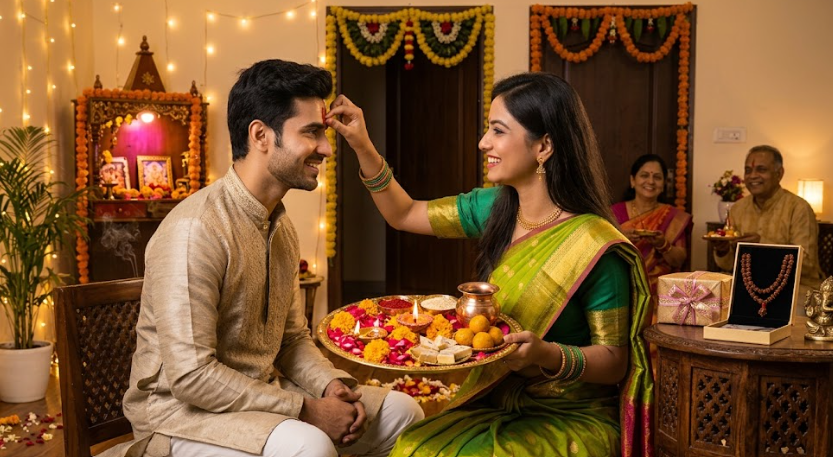
Bhai Dooj is a beautiful celebration of the special bond between brothers and sisters. Observed after Diwali, the festival brings families together through traditional rituals, heartfelt blessings, sweets and thoughtful gifts. In 2026, Bhai Dooj will be celebrated on Wednesday, 11 November. Sisters traditionally prepare a puja thali, apply tilak to their brothers' foreheads and perform Aarti while praying for their happiness and well-being. Whether you are preparing for the ceremony or looking for meaningful spiritual gifts, this guide covers everything from puja samagri and Aarti Thali decoration to the traditional Puja Vidhi.
When Is Bhai Dooj in 2026? Date, Day and Tilak Muhurat
Bhai Dooj is celebrated on the Dwitiya Tithi (second day) of Shukla Paksha in the Hindu month of Kartik. It generally falls two days after Diwali and marks an important occasion for celebrating the relationship between siblings.
In 2026, Bhai Dooj falls on Wednesday, 11 November 2026. Sisters traditionally perform the tilak ceremony during the afternoon Aparahna Muhurat, following their regional Panchang and family customs.
Bhai Dooj 2026 Date and Dwitiya Tithi
Here are the important dates and timings for Bhai Dooj 2026 according to the New Delhi Panchang.
Festival Details | Date and Time |
Bhai Dooj 2026 | Wednesday, 11 November 2026 |
Hindu Tithi | Kartik Shukla Dwitiya |
Dwitiya Tithi Begins | 10 November, 2:00 PM |
Dwitiya Tithi Ends | 11 November, 3:53 PM |
Tilak Muhurat (New Delhi) | 1:10 PM – 3:20 PM |
Auspicious Period | Aparahna Muhurat |
Note: All timings are based on the New Delhi Panchang and Indian Standard Time (IST). Actual timings can differ by location.
Bhai Dooj Tilak Muhurat 2026 – Check Your City
The afternoon period, known as Aparahna, is traditionally considered suitable for the Bhai Dooj tilak ceremony. For New Delhi, the recommended tilak window on 11 November 2026 is 1:10 PM to 3:20 PM.
However, there is no single fixed Tilak Muhurat for every city. Local sunrise, sunset and Panchang calculations influence the timing. Readers should check a reliable local Panchang before planning their ceremony.
Is the Tilak Ceremony Performed in the Morning or Afternoon?
Traditionally, the main Bhai Dooj tilak ceremony is performed during the Aparahna period, which falls in the afternoon. However, the exact practice may vary according to regional traditions and family customs.
It is best to prepare the Aarti Thali and puja essentials beforehand so that the ceremony can be performed comfortably within the locally recommended time.
Bhai Dooj is also known by different names across India:
Bhaiya Dooj: Commonly used in North India.
Bhau Beej: Popular in Maharashtra and parts of western India.
Bhai Phonta: Celebrated in West Bengal.
Yama Dwitiya: Another traditional name associated with the festival.
Although the customs and celebrations differ, the central message remains the same: love, care, blessings and the lasting relationship between siblings.
Why Is Bhai Dooj Celebrated? Significance and Traditional Stories
Bhai Dooj is more than a festival involving tilak, sweets and gifts. It is an occasion to appreciate the relationship between brothers and sisters and express wishes for each other's happiness and well-being.
On this day, sisters traditionally welcome their brothers, apply tilak, perform Aarti and offer sweets. Brothers, in return, express their affection through blessings, gifts and promises of support.
The festival also reminds families to stay connected, appreciate one another and make time for relationships beyond everyday responsibilities.
The Story of Yama and Yamuna
One of the most popular stories associated with Bhai Dooj is about Lord Yama and his sister, Goddess Yamuna.
According to traditional Hindu belief, Yamuna invited her brother Yama to her home. She welcomed him warmly, applied tilak on his forehead and prepared a meal for him.
Touched by her affection and hospitality, Yama offered her a boon. Yamuna wished that brothers who visited their sisters on this special day and received their blessings would be blessed with happiness and a long life.
Yama granted her wish. This story is associated with the tradition of sisters applying tilak and praying for their brothers' well-being.
The Meaning Behind the Tilak and Aarti
The tilak ceremony represents affection, good wishes and blessings. Applying roli or kumkum to a brother's forehead is a traditional way for sisters to express their prayers for his happiness and well-being.
Similarly, Aarti is performed as a gesture of devotion and good wishes. The sweets, family meal and exchange of gifts add warmth to the celebration.
Some traditions also associate Bhai Dooj with Lord Krishna and his sister Subhadra, who welcomed him with a ceremonial tilak after his victory over Narakasura. These stories reflect the importance of sibling relationships in different Hindu traditions.
Bhai Dooj Puja Samagri: Complete Checklist for the Aarti Thali
Before beginning the Bhai Dooj ceremony, it is helpful to arrange all the necessary puja items in one place. A properly organised thali makes the ritual easier and prevents last-minute preparation.
The exact Bhai Dooj Puja Samagri list may differ depending on regional practices and household traditions. However, the following items are commonly used.
Puja Item | Purpose or Use | Requirement |
Roli or Kumkum | Used for applying tilak | Common |
Akshat (unbroken rice) | Placed over the tilak, where customary | Common |
Puja or Aarti Thali | Holds the ritual essentials | Common |
Diya | Used during Aarti | Common |
Ghee or Oil | Used for lighting the diya | As required |
Cotton Wick | Used in the diya | As required |
Fresh Flowers or Petals | For decoration and offering | Common |
Sweets or Mithai | Offered to the brother | Common |
Fruits | Offered according to family customs | Optional |
Small Bowl of Water | Kept for ritual use | Optional |
Agarbatti or Dhoop | Used for fragrance and worship | Optional |
Small Spoon | Helps arrange puja materials | Optional |
Matchbox or Lighter | Used to light the diya | As required |
Clean Cloth | For cleaning and arranging items | Optional |
Apart from these essentials, some families may include coconut, dry fruits, a sacred thread or other items according to their customs.
Remember that every item does not need to be included in every Bhai Dooj celebration. The most important thing is to follow the practices observed in your family.
How to Prepare a Traditional Bhai Dooj Aarti Thali
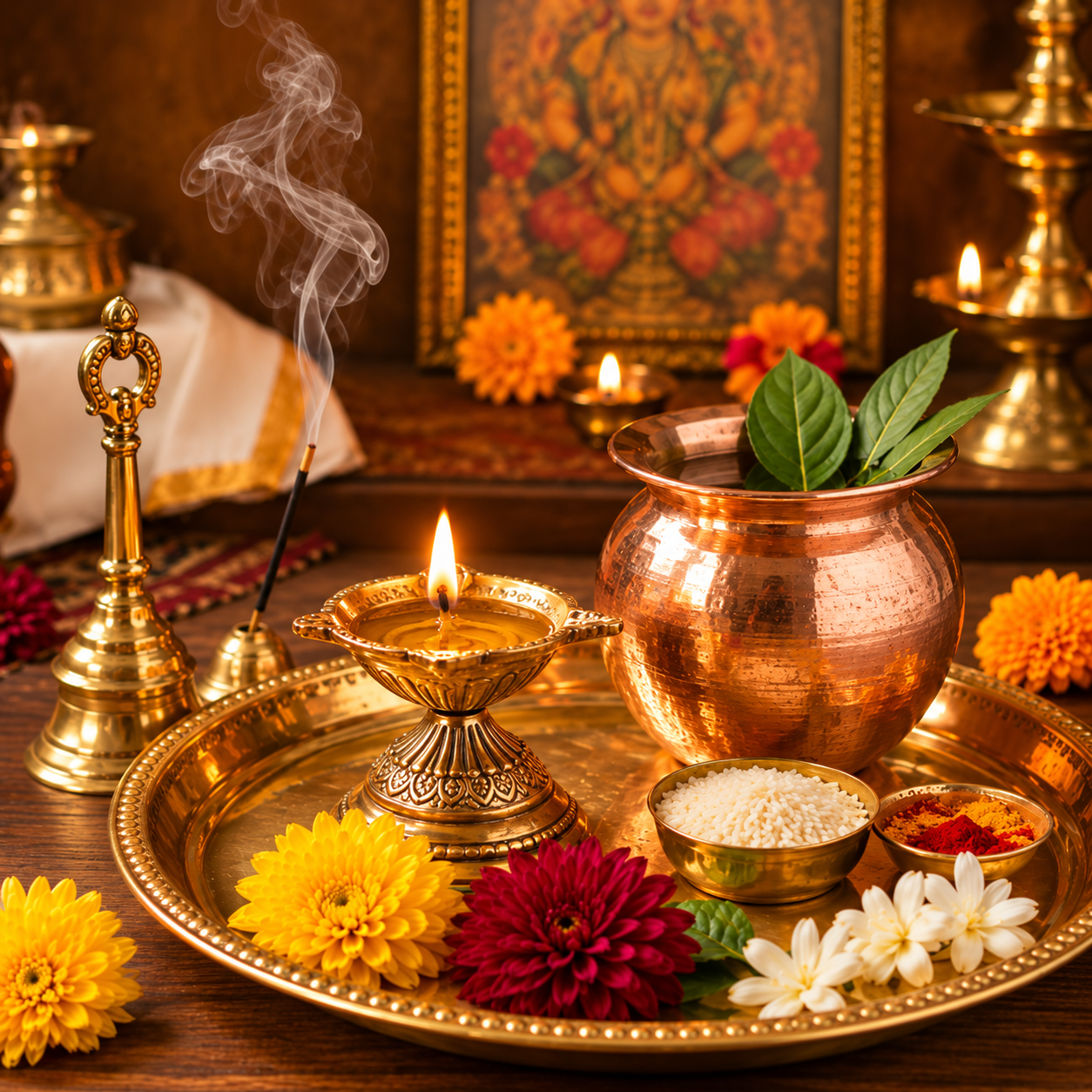
Preparing the Bhai Dooj Aarti Thali is one of the most important parts of getting ready for the celebration. A thoughtfully arranged plate keeps the puja essentials organised and gives the ceremony a traditional festive appearance.
You do not need an elaborate arrangement. A clean plate, the commonly used puja items and a little decoration are enough to create a beautiful Aarti Thali.
Follow these simple steps to prepare your Bhai Dooj Puja Thali at home.
Step 1 – Choose and Clean the Puja Thali
Start by selecting a clean and stable plate. Brass and steel are commonly used for traditional puja arrangements, although other suitable plates can also be used.
Wash and dry the plate properly before arranging the items. Make sure there is enough space for the diya, tilak bowls and other essentials.
If you prefer having several puja accessories together, a Brass Puja Thali Set (9 Piece) can be a convenient option. NamanKart's set includes components such as a diya, kalash, bell, agarbatti stand, kumkum bowls and spoon. It can also be used for other household puja occasions.
Step 2 – Arrange the Tilak Materials
Next, arrange roli or kumkum and akshat in small bowls. Keep them close to one another so they are easy to access during the ceremony.
Some households prefer using traditional kumkum, while others use different tilak materials according to their religious customs.
If you want an additional option for your puja arrangement, Ashtagandh Tilak Powder can be considered. It is an optional devotional product, not a compulsory item for Bhai Dooj.
Step 3 – Place the Diya and Aarti Items Safely
The diya is an important part of the traditional Aarti arrangement. Place it on a flat, stable section of the thali where it cannot easily tip over.
Depending on your household tradition, you can use a ghee or oil diya with a cotton wick.
For those who follow extended-flame traditions, a Brass Akhand Jyot Diya is another devotional accessory to consider. However, an Akhand Jyot is not necessary for an ordinary Bhai Dooj Aarti. A regular diya is sufficient according to common household practices.
Always keep the flame away from flowers, ribbons, paper decorations and loose clothing. Never leave a burning diya unattended.
Step 4 – Add Flowers, Sweets and Other Offerings
Once the main puja items are arranged, add fresh marigold or rose petals to give the thali a festive appearance.
Keep the sweets in a separate clean bowl or plate if there is not enough room on the thali. Fruits and other offerings can also be arranged separately according to your family tradition.
Avoid overcrowding the plate. Every item should remain easy to reach during the ceremony.
Step 5 – Keep the Thali Ready for the Ceremony
Before the ritual begins, check that everything is properly arranged.
Make sure the tilak materials are accessible, the diya is stable and the plate is balanced. Keep the matchbox or lighter in a safe place, away from children.
A little preparation beforehand makes the Bhai Dooj ceremony more comfortable and allows you to focus on spending meaningful time with your sibling.
Bhai Dooj Thali Decoration Ideas: Simple and Traditional Designs
A beautifully decorated thali adds to the festive atmosphere of Bhai Dooj. You can create an attractive arrangement using everyday materials without making the plate too complicated.
The purpose of decoration is to make the Aarti Thali look welcoming while keeping all the ritual essentials accessible.
Here are some simple Bhai Dooj Thali Decoration ideas you can try at home.
Easy Flower and Rangoli-Inspired Decoration
Flowers are among the easiest ways to give your Aarti Thali a traditional appearance.
Try these simple ideas:
Marigold petals: Arrange yellow and orange petals around the outer edge of the plate.
Rose decoration: Use a few fresh rose petals for a simple and elegant appearance.
Rangoli-inspired patterns: Create a small decorative motif using flower petals or coloured rice around the thali.
Traditional cloth base: Place the thali on a clean decorative cloth in festive colours such as red, yellow or saffron.
You can also use a small decorative toran or ribbon around the puja area to create a festive setting.
How to Decorate the Thali Without Blocking the Puja Items
While decorating the thali, make sure the functional arrangement remains the priority.
Place the kumkum and akshat in separate bowls instead of leaving them in loose piles. Keep the diya in an open space and leave sufficient room for the Aarti movement.
A simple floral border, neatly arranged bowls and a traditional brass plate can look beautiful without requiring excessive decoration.
Safety Tips for a Decorated Aarti Thali
A decorated thali should also be safe to handle, particularly when a diya is burning.
Keep paper flowers, ribbons and synthetic decorations away from the flame.
Place the diya on a stable surface.
Avoid filling the plate with too many decorative accessories.
Keep children away from the burning diya and matchbox.
Never leave a lit diya unattended.
A clean and well-arranged thali is always better than one that looks attractive but is difficult to use.
Bhai Dooj Puja Vidhi: Step-by-Step Ritual at Home
The Bhai Dooj Puja Vidhi is relatively simple and can be performed at home with commonly used puja essentials. The exact order of rituals may vary between regions and families, so it is best to follow your household's established practices.
Here is a commonly followed sequence for the Bhai Dooj celebration.
1. Clean the Puja Area
Begin by cleaning the place where the ceremony will take place. Arrange the Aarti Thali, sweets, flowers and other puja essentials beforehand.
2. Welcome Your Brother
Invite your brother to sit comfortably in the designated place. Some families follow particular seating directions or other traditional practices.
3. Light the Diya
Light the diya carefully using ghee or oil, depending on your preference and family custom. Make sure it is placed securely.
4. Apply the Tilak
Take a little roli or kumkum and apply it to your brother's forehead. Add akshat over the tilak if this is part of your household tradition.
The tilak symbolises affection, blessings and prayers for his well-being.
5. Perform the Aarti
Hold the Aarti Thali carefully and perform the Aarti according to your family's tradition. Keep the flame at a safe distance and avoid rushing through the ritual.
6. Offer Sweets and Food
Offer sweets or mithai to your brother after the ceremony. Many families also prepare a special meal and enjoy it together.
7. Exchange Gifts and Blessings
Complete the celebration by exchanging gifts, sharing blessings and spending time with one another. Gifts are a personal expression of affection and are not a compulsory part of the religious ritual.
What Happens During the Bhai Dooj Tilak Ceremony?
During the tilak ceremony, the sister traditionally applies roli or kumkum to her brother's forehead and may place akshat over it. She then performs Aarti and offers prayers for his happiness and well-being.
The brother may give his sister a gift or express his affection through blessings and a gesture of appreciation.
Aarti, Sweets and the Family Meal
The Aarti and meal are important parts of the celebration for many households. Sisters prepare sweets or favourite dishes, while brothers visit their sisters and participate in the rituals.
The meal also provides an opportunity for family members to reconnect, share memories and enjoy the occasion together.
Spiritual Bhai Dooj Gift Ideas for Brother and Sister
Choosing a gift for Bhai Dooj is another lovely way to make the festival memorable. While traditional gifts often include sweets, clothes and personal accessories, devotional products can also make thoughtful choices for siblings who appreciate spirituality.
The best gift is one that matches the recipient's interests and personal preferences. A spiritual accessory, reusable puja item or devotional keepsake can be a meaningful option without making the occasion feel overly formal.
Here are some Bhai Dooj Gift Ideas worth considering.
Bhai Dooj Gifts for Brother
If your brother enjoys daily prayer, meditation or maintaining a home mandir, devotional accessories can be a suitable gift.
1. 5 Mukhi Rudraksha Mala (108 Beads)
A 5 Mukhi Rudraksha Mala can be a thoughtful choice for someone who regularly practises japa or meditation. The 108-bead mala is commonly used for counting repetitions during prayer.
It is a suitable devotional keepsake for a brother who values traditional spiritual practices.
2. Tulsi Kanthi Mala
For someone who prefers a simple devotional accessory, a Tulsi Kanthi Mala is another option. It is a neck mala made from Tulsi wood and can be considered by anyone who appreciates devotional jewellery.
3. Brass Ganesh Idol
A Brass Ganesh Idol can be a meaningful addition to a home mandir. It is a suitable gift for a brother who enjoys keeping devotional idols in his home or prayer space.
A small brass idol is also a reusable keepsake that can be displayed in a dedicated worship area.
Bhai Dooj Gifts for Sister
When choosing Bhai Dooj Gifts for Sister, consider what she enjoys rather than selecting something only because it is traditionally associated with women.
Here are a few spiritual gifting options:
1. Tulsi Locket Mala
A Tulsi Locket Mala can be a thoughtful devotional accessory for a sister who enjoys spiritual jewellery. Choose a design that matches her personal style and preferences.
2. Brass Puja Thali Set
If your sister regularly performs puja at home, a Brass Puja Thali Set can be a practical and reusable gift. It brings several useful puja accessories together and can be used for different religious occasions throughout the year.
3. Devotional Idol or Spiritual Keepsake
A small devotional idol can be a suitable choice for someone who maintains a home mandir. You can select a deity or design based on her personal beliefs and preferences.
Bhai Dooj Traditional Gifts with Spiritual Meaning
Traditional gifting does not always have to involve expensive items. A useful accessory or a thoughtfully selected devotional product can carry personal meaning.
Some ideas include:
Brass puja accessories for everyday worship.
Rudraksha or Tulsi malas for devotional practices.
Small brass idols for a home mandir.
Decorative puja essentials for someone who enjoys preparing a prayer space.
These are optional spiritual gift ideas, not items specifically required by Bhai Dooj traditions.
How to Choose a Meaningful Gift for Your Sibling
A thoughtful gift does not have to be expensive. What matters is whether it reflects the recipient's interests and makes them feel appreciated.
Before choosing a gift, consider the following:
Personal preference: Think about whether your sibling enjoys devotional products, jewellery, home decor or practical accessories.
Everyday use: Select something they can genuinely use or appreciate.
Material and quality: Check the product material, finish and care instructions.
Size and design: Choose an item that suits their home or personal style.
Budget: Set a comfortable spending limit rather than choosing something based only on price.
You can make the gift more personal by adding a handwritten note, a family photograph or a small message expressing your appreciation.
How to Celebrate Bhai Dooj When You Cannot Meet in Person
Living in different cities or countries does not mean siblings have to miss the celebration. With a little planning, you can still make Bhai Dooj special even when meeting in person is not possible.
Here are a few ways to celebrate together from a distance:
Arrange a video call: Connect during the tilak ceremony and share the celebration virtually.
Send sweets: Have your sibling's favourite sweets delivered to their home.
Choose a thoughtful gift: Send a devotional accessory, personal keepsake or something they have been wanting.
Share a personal message: Write a heartfelt note or send a voice message expressing your wishes.
Plan a future visit: If schedules do not allow a meeting on the festival day, plan a family get-together later.
The distance may change how you celebrate, but the affection and connection between siblings remain just as meaningful.
Frequently Asked Questions About Bhai Dooj 2026
1. When is Bhai Dooj in 2026?
Bhai Dooj will be celebrated on Wednesday, 11 November 2026. It falls on Kartik Shukla Dwitiya, the second day of the bright lunar fortnight in the Hindu month of Kartik.
2. What items are needed for a Bhai Dooj Aarti Thali?
Commonly used items include roli or kumkum, akshat, a puja thali, diya, ghee or oil, cotton wick, flowers and sweets. Some families also include fruits, incense and other offerings according to their customs.
3. What should be included in Bhai Dooj Puja Samagri?
A basic Bhai Dooj Puja Samagri checklist includes a clean thali, tilak material, rice grains, diya, cotton wick, flowers and sweets. Additional items such as incense, fruits and water may be included depending on regional and household practices.
4. How do you decorate a Bhai Dooj Thali?
You can decorate a Bhai Dooj Thali using marigold petals, rose flowers, a simple rangoli-inspired design or a traditional decorative base. Keep the diya area clear and arrange all puja essentials so they are easy to access.
5. What is the significance of the Bhai Dooj Tilak Ceremony?
The tilak ceremony symbolises a sister's affection, prayers and good wishes for her brother's happiness and well-being. It is one of the central traditions associated with the festival.
6. What is the Bhai Dooj Puja Vidhi at home?
A commonly followed Puja Vidhi involves cleaning the puja area, arranging the thali, welcoming the brother, lighting a diya, applying tilak, performing Aarti and offering sweets. Families may follow additional rituals according to their regional traditions.
7. What are some thoughtful Bhai Dooj Gift Ideas for a brother?
A devotional mala, Tulsi Kanthi Mala, brass Ganesh idol or useful puja accessory can be a thoughtful option for a brother who appreciates spiritual products. Choose according to his interests and personal preferences.
8. What is a good Bhai Dooj gift for a sister?
A Brass Puja Thali Set, Tulsi Locket Mala or devotional keepsake can be a meaningful gift for a sister who enjoys spiritual accessories or home worship. A gift that reflects her individual interests is always a good choice.
9. Can sisters and brothers exchange gifts on Bhai Dooj?
Yes. Although traditional customs often involve brothers giving gifts to their sisters, modern families may exchange gifts mutually. Gift-giving is a personal expression of affection and is not compulsory for performing the rituals.
10. Is there one fixed Bhai Dooj Tilak Muhurat for all cities?
No. Tilak Muhurat can vary depending on the city and local Panchang calculations. The recommended New Delhi timing for 2026 is 1:10 PM to 3:20 PM on 11 November. Always check the local Panchang for your location.