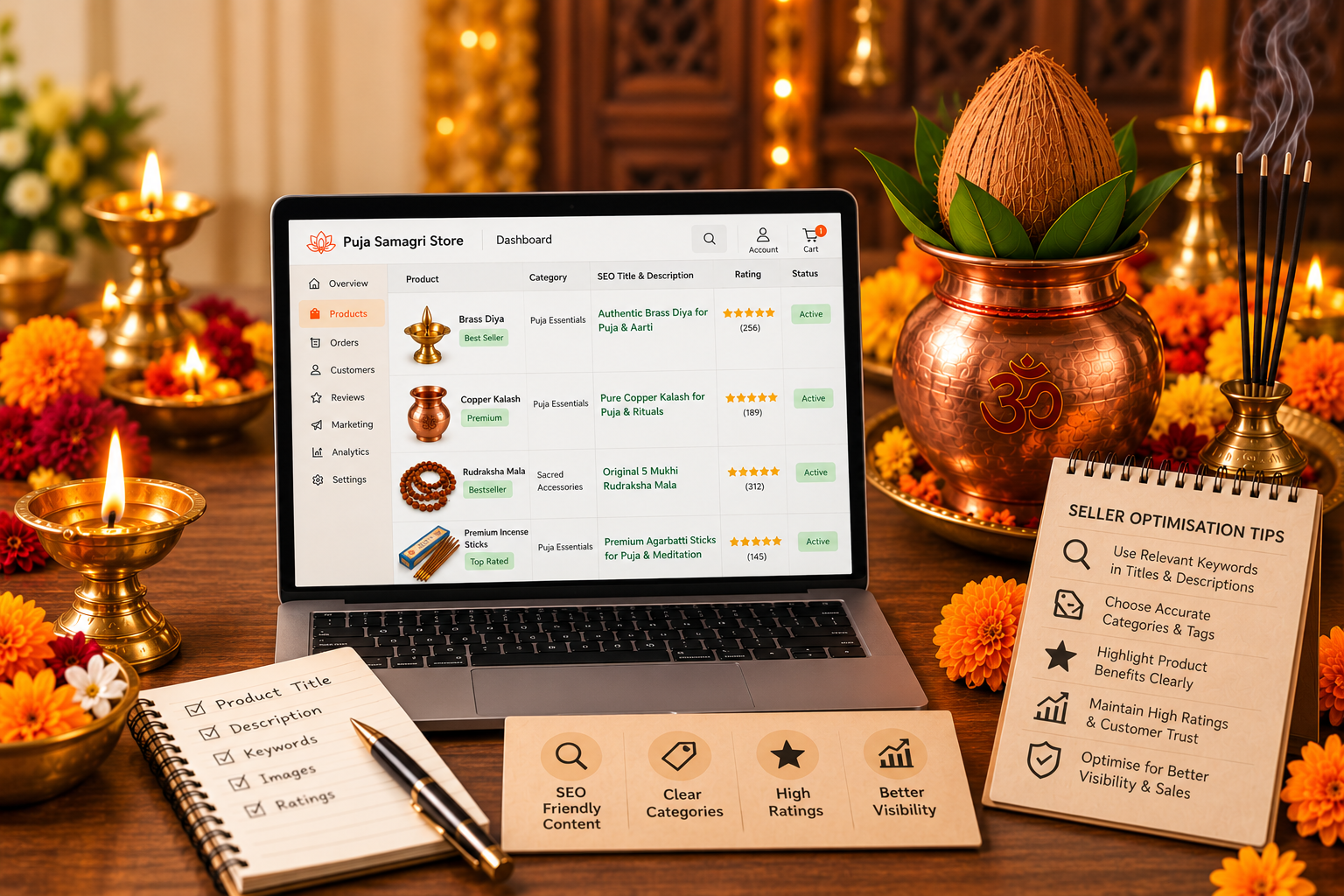
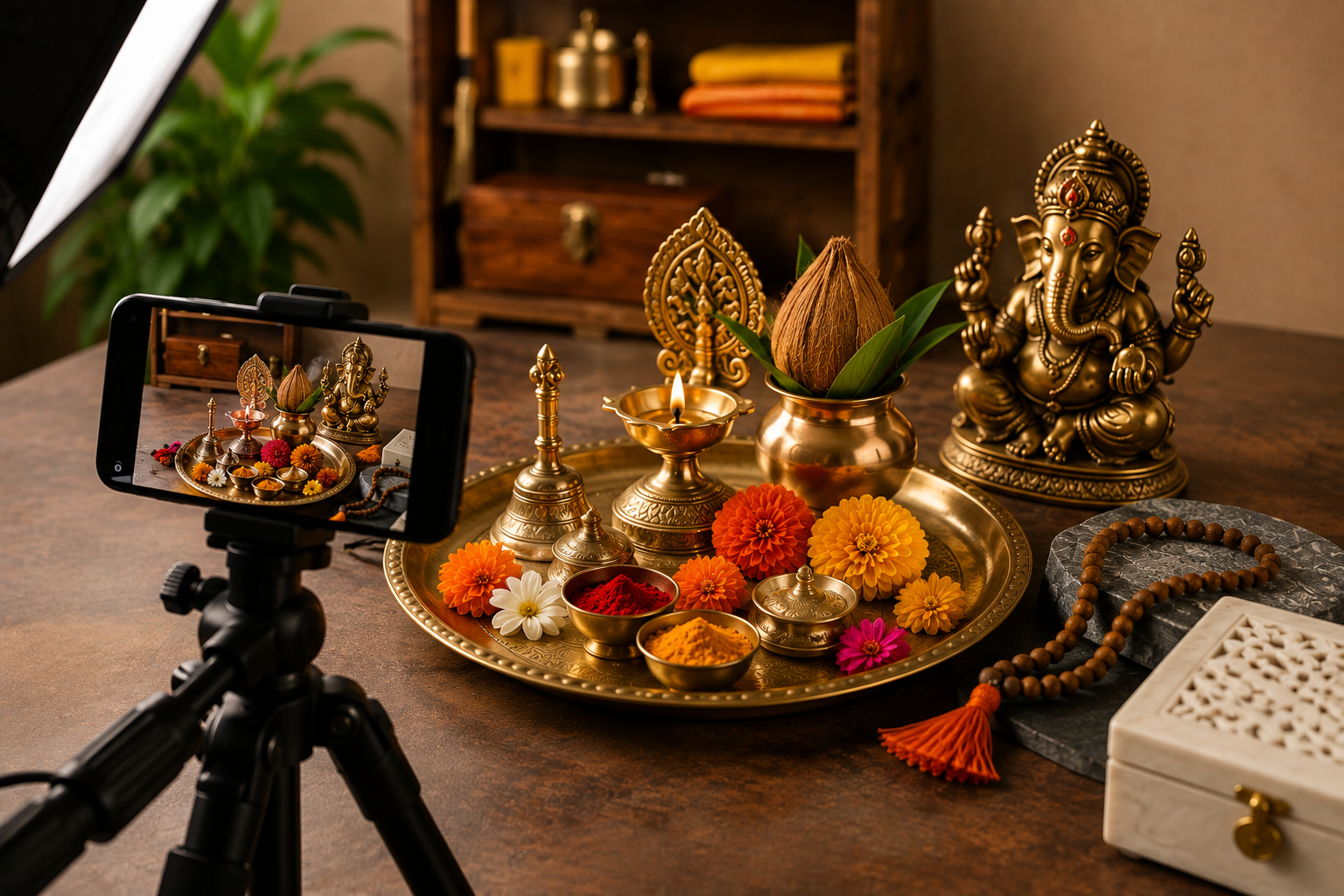
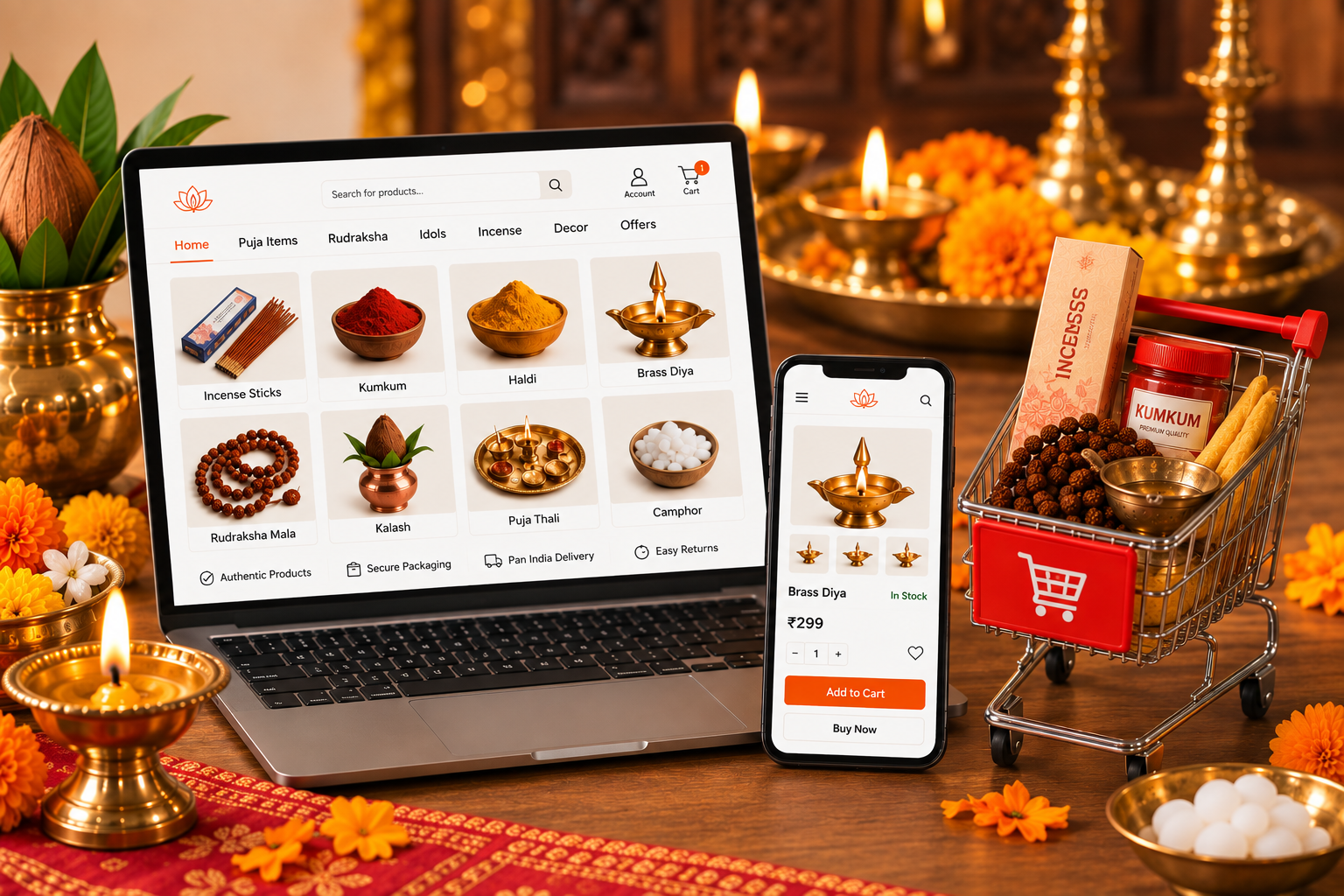
A practical guide to optimising puja product listings — covering titles, descriptions, images, attributes, and keyword placement. Learn how to structure listings that rank in search and convert browsers into buyers, avoid common mistakes like vague titles and duplicate descriptions, and maintain listing quality across a growing catalog.
ॐ
NamanKart Editorial Team
Vedic Research & Temple Traditions
A puja item can be authentic, well-priced, and beautifully made — and still sit unsold for months if the listing around it is weak. Unlike browsing a physical store where a customer can pick up an idol and turn it over in their hands, online shoppers rely entirely on the title, description, images, and attributes to decide whether a product is worth buying. A poorly written listing doesn't just rank lower in search; it fails to answer the questions a buyer is silently asking before they add something to cart.
This is especially true for puja items, where trust matters more than in most product categories. A buyer wants to know the exact material, size, origin, and use of an item before bringing it into their home for worship. This guide walks through how to build and optimise puja product listings — from writing titles that both rank and convert, to structuring descriptions, choosing the right images, and avoiding the common mistakes that quietly cost sales across an entire catalog.