How to Price Puja Items — Balancing Cost and Value
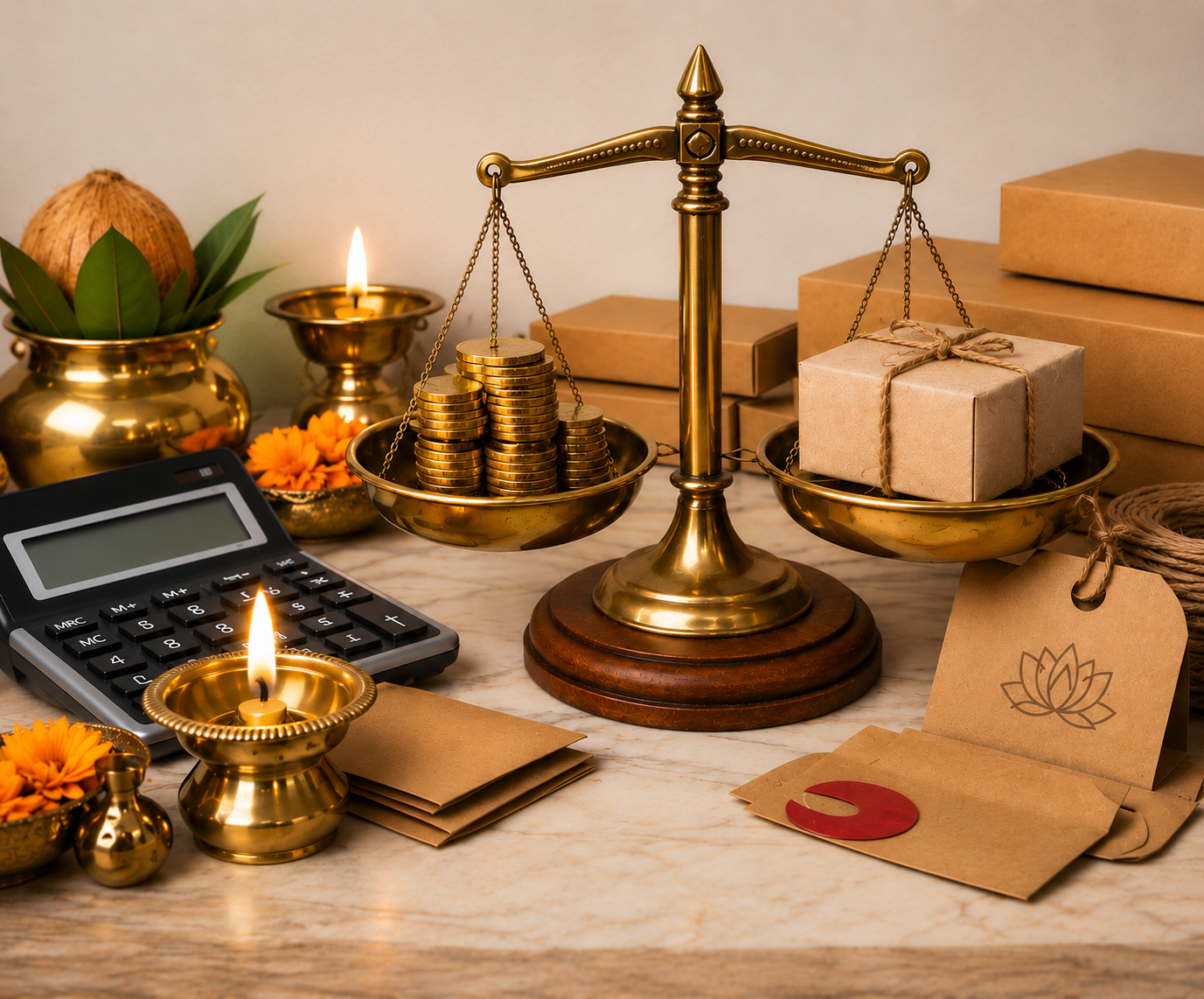
Ten listings for the same brass Ganesh idol, ten different prices — some of the gap is genuine, some is just poor reasoning. This guide breaks down what should actually drive puja item pricing: material cost, craftsmanship, sourcing, and packaging, so sellers can set a price that's fair and defensible.
ॐ
NamanKart Editorial Team
Vedic Research & Temple Traditions
Look at ten listings for what appears to be the same brass Ganesh idol, and the price can range from a few hundred rupees to several thousand. Some of that gap is genuine — solid brass versus a plated alloy, hand-finished detailing versus mass production — but some of it is simply inconsistent or poorly reasoned pricing on the seller's part. For puja items specifically, getting pricing right matters more than usual, because buyers are often comparing across sellers for what looks like an identical product, and a price that seems too high or suspiciously low can both raise doubt.
This guide breaks down the actual factors that should influence how a puja item is priced — material cost, craftsmanship, sourcing, and the more overlooked costs like packaging and handling for fragile goods — and how to weigh them into a price that reflects genuine value rather than a number picked to match competitors or maximize margin without justification.