
Dev Deepawali 2026: Date, Shubh Muhurat, Deepdaan Vidhi & How to Celebrate at Home
Dev Deepawali 2026 will be celebrated on Tuesday, 24 November 2026, on the occasion of Kartik Purnima. Also known as the Diwali of the Gods, this festival is especially famous in Varanasi, where thousands of diyas illuminate the ghats along the River Ganga. The occasion commemorates Lord Shiva's victory over Tripurasura and holds special significance for Shiva devotees.
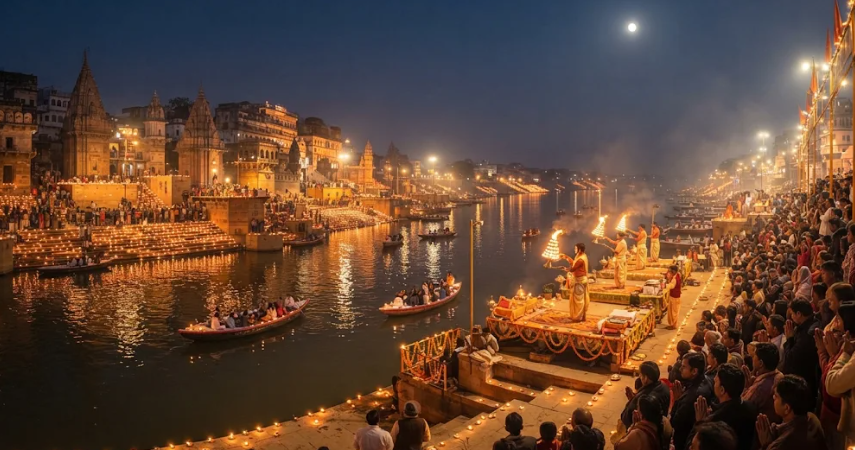
Dev Deepawali 2026 will be celebrated on Tuesday, 24 November 2026, on the occasion of Kartik Purnima. Also known as the Diwali of the Gods, this festival is especially famous in Varanasi, where thousands of diyas illuminate the ghats along the River Ganga. The occasion commemorates Lord Shiva's victory over Tripurasura and holds special significance for Shiva devotees.
Whether you are planning to witness the celebrations in Varanasi or observe the festival at home, this guide covers everything you need to know, including the date, shubh muhurat, religious significance, puja vidhi, Deepdaan and essential puja items.
Dev Deepawali 2026 Date – When Is Dev Deepawali?
Dev Deepawali will be observed on Tuesday, 24 November 2026, on Kartik Purnima, the full moon day of the Hindu month of Kartik.
The festival is also called Dev Diwali, Dev Deepawali and Tripurotsav. It is traditionally celebrated around 15 days after the main Diwali festival. While Diwali is associated with Lord Rama's return to Ayodhya and the victory of good over evil, Dev Deepawali is particularly associated with Lord Shiva's victory over Tripurasura.
The occasion is marked by prayers, holy bathing, lighting earthen lamps and Deepdaan. Varanasi is especially known for its grand celebrations, when the ghats and temples are decorated with countless diyas.
Dev Deepawali 2026 Tithi and Shubh Muhurat
According to Drik Panchang, the following are the Varanasi timings for Dev Deepawali 2026:
Panchang Detail | Date and Time |
Festival | Dev Deepawali |
Date | 24 November 2026 |
Day | Tuesday |
Purnima Tithi Begins | 23 November, 11:42 PM |
Purnima Tithi Ends | 24 November, 8:23 PM |
Pradoshakal Muhurat | 5:08 PM – 7:47 PM |
The Pradoshakal period is particularly important for evening lamp offerings. Devotees generally light diyas during this time as part of their Kartik Purnima observance.
Note: These timings are specific to Varanasi. Sunset and panchang calculations vary by location, so check your local panchang before performing the rituals.
Dev Deepawali Kab Hai 2026 According to the Hindu Calendar?
Dev Deepawali kab hai 2026? The festival falls on 24 November, which is Kartik Purnima in the Hindu calendar.
It occurs during the Shukla Paksha, the bright fortnight of the Kartik month. Purnima refers to the full moon day, which is considered an important occasion for prayers, charity, holy bathing and devotional activities.
What Is Dev Deepawali and Why Is It Celebrated?
Dev Deepawali literally means the Diwali of the Gods. According to Hindu religious belief, the gods descend to Earth on Kartik Purnima to celebrate the victory of Lord Shiva over the demon Tripurasura.
The festival is closely associated with Lord Shiva and is also known as Tripurotsav and Tripurari Purnima. The tradition of lighting lamps symbolises the celebration of divine victory and the removal of darkness.
There are several reasons why this festival holds special importance.
1. Celebration of Lord Shiva's Victory
Dev Deepawali commemorates Lord Shiva's destruction of the three cities of Tripurasura. This victory is remembered as a triumph of righteousness over destructive forces.
2. Importance of Kartik Purnima
Kartik Purnima is considered an auspicious day for religious observances. Devotees traditionally take a holy dip, offer prayers, light lamps and participate in charitable activities.
3. Connection with the River Ganga
The Ganga holds deep religious importance in Hindu tradition. On Dev Deepawali, devotees offer prayers to the river and perform Deepdaan as an expression of devotion and gratitude.
4. Spiritual Importance of Varanasi
Varanasi, also known as Kashi, is closely associated with Lord Shiva. The festival has a special connection with the city, where the illuminated ghats create a grand setting for the celebrations.
Dev Deepawali Story – The Victory of Lord Shiva Over Tripurasura
The story of Dev Deepawali is associated with Lord Shiva's victory over Tripurasura, a powerful demon whose three cities became a threat to the three worlds. This traditional mythological account explains why Kartik Purnima is also known as Tripurari Purnima.
Who Was Tripurasura?
According to a commonly narrated Puranic account, three powerful asura brothers named Tarakaksha, Kamalaksha and Vidyunmali performed severe penance and received a boon from Lord Brahma.
They were granted three magnificent cities, collectively known as Tripura:
One city made of gold.
One city made of silver.
One city made of iron.
These cities were believed to move through different realms and could align in a particular position only at a rare moment.
Initially, the brothers used their powers to establish their dominance. Over time, however, they became arrogant and began troubling the gods, sages and other inhabitants of the three worlds.
How Did Lord Shiva Destroy Tripura?
Unable to control the growing threat, the gods approached Lord Shiva and requested his help.
Lord Shiva agreed to destroy the three cities and restore balance. According to the traditional story, the gods and cosmic forces came together to prepare his divine chariot and weapon.
When the three cities aligned, Lord Shiva released a single powerful arrow that destroyed Tripura.
This victory freed the three worlds from the oppression of the asuras. Lord Shiva was then praised as Tripurari, meaning the destroyer of Tripura.
Why Is This Victory Celebrated as Dev Deepawali?
Hindu tradition associates this victory with Kartik Purnima. It is believed that the gods celebrated Lord Shiva's triumph by lighting lamps.
The festival is therefore observed through Deepdaan and the illumination of temples, homes and riverfronts.
The story also carries a symbolic message: arrogance and injustice cannot prevail forever, while righteousness and divine wisdom ultimately restore balance.
Different Puranic and regional accounts may describe certain details differently, but the central association with Lord Shiva's victory remains the foundation of the festival.
How Is Dev Deepawali Celebrated in Varanasi?
Dev Deepawali celebration in Varanasi is one of the most recognisable festival experiences in India. On Kartik Purnima, the ghats along the River Ganga become a centre of prayers, lamp offerings and devotional activities.
The celebrations bring together religious traditions, local communities and visitors who gather to witness the illuminated riverfront.
Ganga Ghats Illuminated with Diyas
One of the most striking features of Dev Deepawali is the lighting of earthen lamps along the ghats.
Rows of diyas are arranged on the steps, temples and riverfront areas. As evening approaches, their reflections appear on the water, creating a beautiful view across the Ganga.
The lamps are not merely decorations. For devotees, each diya represents a prayer and an offering of devotion.
Ganga Aarti and Deepdaan on Kartik Purnima
Ganga Aarti is another important part of the celebrations. Priests perform the ritual using large lamps, incense, flowers and traditional prayers.
Devotees also participate in Deepdaan, offering lit lamps as a symbol of gratitude and reverence towards the River Ganga.
Famous Ghats to Know About
Several ghats are associated with the Dev Deepawali celebrations.
Dashashwamedh Ghat: One of the most prominent ghats in Varanasi, known for its grand Ganga Aarti and religious activities.
Assi Ghat: A popular location for morning and evening prayers, attracting devotees throughout the year.
Chet Singh Ghat: Known for its historic surroundings and its place along the illuminated riverfront.
Panchganga Ghat: An important religious location associated with traditional bathing and worship.
Raj Ghat and Namo Ghat: Northern riverfront locations that form part of the wider Varanasi ghat landscape.
What Makes Dev Deepawali in Varanasi Special?
The combination of the River Ganga, thousands of illuminated diyas, temple prayers and devotional music gives the festival its distinctive atmosphere.
Unlike celebrations limited to individual homes or temples, Dev Deepawali brings the entire riverfront into the festivities. The shared participation of residents, devotees and volunteers makes it an important cultural and religious occasion for Kashi.
Event schedules, viewing access and crowd arrangements can change each year, so visitors should check official local announcements before planning their visit.
Dev Deepawali Puja Vidhi – How to Perform Puja at Home
You do not need an elaborate arrangement to observe Dev Deepawali. A clean puja space, essential worship items and a few diyas are enough for a simple home celebration.
The following is a general Dev Deepawali puja vidhi. Families can follow their regional and household traditions wherever the rituals differ.
What to Prepare Before the Puja
Arrange the following items before beginning:
Lord Shiva idol or photograph.
Clean puja chowki and cloth.
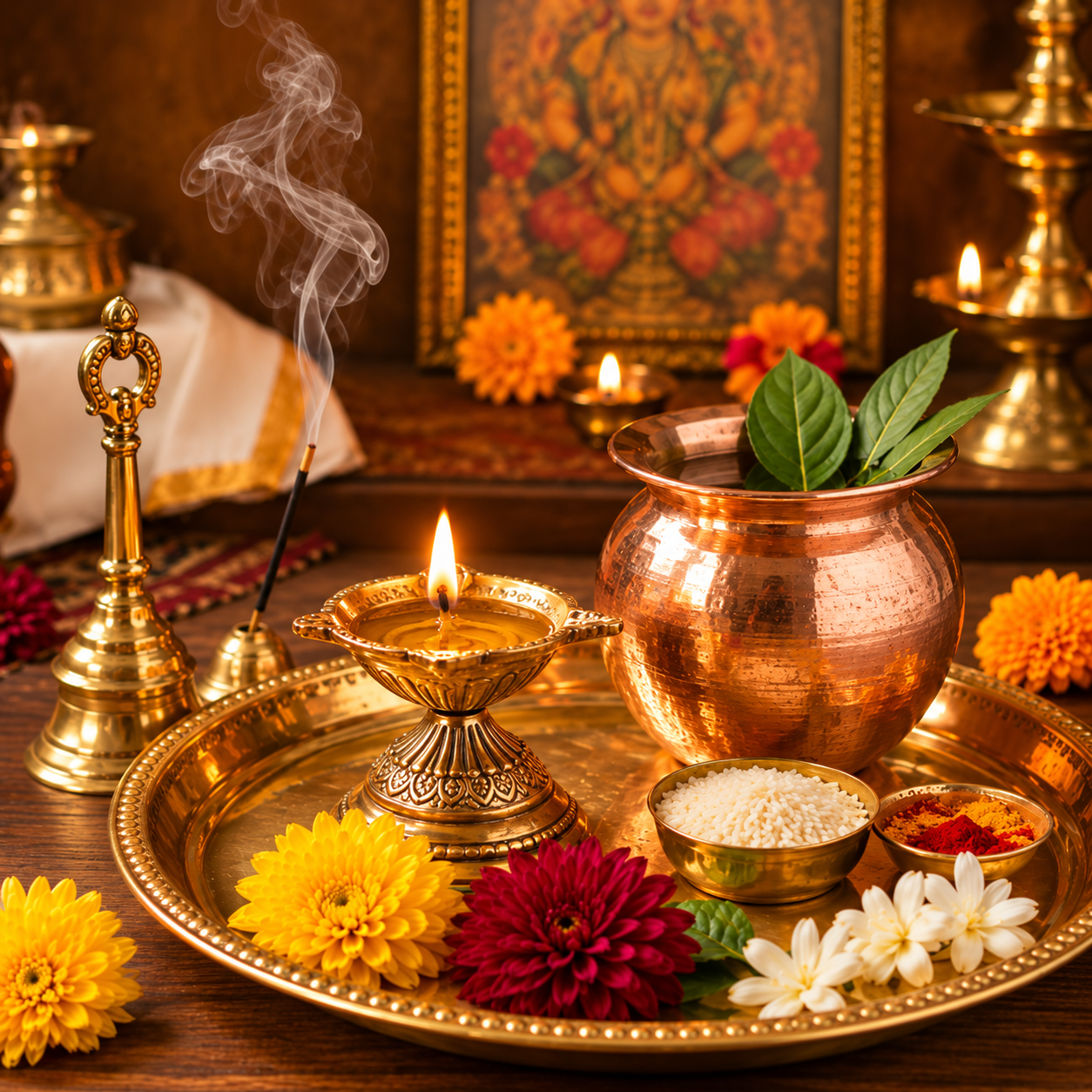
Puja thali.
Diya, cotton wicks and ghee or oil.
Flowers and bel patra, where customary.
Roli, kumkum and chandan.
Gangajal or clean water.
Dhoop and incense sticks.
Camphor and bell.
Fruits and sweets for bhog.
Step-by-Step Dev Deepawali Puja Vidhi
Step 1: Clean the Puja Area
Clean the area where you plan to perform the worship. Place a clean cloth on the chowki and arrange the picture or idol of Lord Shiva.
Step 2: Arrange the Puja Items
Keep the flowers, diya, water, tilak and other essentials within reach. This helps you perform the rituals without interruptions.
Step 3: Offer Prayers to Lord Shiva
Begin with a prayer to Lord Ganesha according to your family custom. Then worship Lord Shiva with devotion.
Offer water or Gangajal, flowers and bel patra if these are part of your household's Shiva puja practice.
Step 4: Apply Tilak and Offer Bhog
Apply chandan or tilak to the deity and offer fruits, sweets or other customary offerings.
Step 5: Chant Mantras and Perform Aarti
Recite a Shiva mantra or listen to a devotional prayer. Perform Shiva Aarti using a diya and bell.
Step 6: Light Diyas in the Evening
As evening approaches, light diyas in your puja area, balcony or courtyard. This is one of the central observances of Dev Deepawali.
Dev Deepawali Deepdaan Vidhi – How to Offer Diyas
Deepdaan is one of the most important traditions associated with Dev Deepawali. The word combines Deep, meaning lamp, and Daan, meaning offering.
Devotees light and offer diyas as an expression of faith, gratitude and remembrance. In Varanasi, this tradition is particularly visible along the River Ganga.
What Is Deepdaan?
Deepdaan symbolises offering light as part of worship. It is traditionally performed during Kartik Purnima, especially in the evening.
Some devotees place lamps near temples or in their home prayer spaces, while others participate in riverfront lamp offerings according to local customs.
How to Perform Deepdaan at Home
Follow these simple steps:
Take a clean, stable earthen or metal diya.
Fill it with ghee or oil according to your preference and tradition.
Place a cotton wick inside the lamp.
Keep the diya on a stable, heat-resistant surface.
Light it during the evening prayer period.
Offer a prayer to Lord Shiva and Maa Ganga.
Conclude with a moment of gratitude and devotion.
You can light one diya or several lamps depending on your family's tradition and the space available.
Important Safety Tips
Keep diyas away from curtains, paper, dry flowers and other flammable materials.
Never leave a burning lamp unattended.
Place lamps on stable surfaces to prevent accidental tipping.
Keep lit diyas away from children and pets.
Avoid placing oil lamps directly on riverbanks where they may cause hazards.
Do not throw plastic, synthetic decorations or other waste into the Ganga.
If you are performing Deepdaan near a river, follow local arrangements and use designated offering areas. A home-based lamp offering is also a meaningful way to observe the tradition.
How to Celebrate Dev Deepawali at Home
Not everyone can visit Varanasi for the celebrations, but the festival can be observed at home with simple rituals.
Here are a few ways to make the occasion special:
1. Begin with Morning Prayers
Start the day with a bath and prayers according to your family tradition. Devotees may also visit a nearby temple.
2. Perform Shiva Puja
Arrange a small puja for Lord Shiva. Offer flowers, water, bel patra and other customary items.
3. Decorate Your Home
Clean the entrance and puja area. You can use rangoli, flowers and traditional decorations to create a festive atmosphere.
4. Light Diyas in the Evening
Place diyas in the prayer room, balcony or courtyard. Lighting lamps is the most recognisable part of the festival.
5. Chant Mantras or Perform Aarti
Spend some time reciting Shiva mantras or performing aarti with family members.
6. Practise Charity
Some families observe the day by donating food, clothes or other essentials to people in need. Choose an act of charity according to your means.
Dev Deepawali Puja Samagri Checklist
Use this checklist to prepare your items before the evening rituals.
Puja Item | Purpose |
Lord Shiva idol or photograph | Main deity for worship |
Puja thali | To arrange worship essentials |
Diya | For lamp offering |
Ghee or oil | To light the diya |
Cotton wicks | For lighting lamps |
Flowers | For offering to the deity |
Bel patra | Traditional Shiva offering |
Roli, kumkum and chandan | For tilak and worship |
Gangajal or clean water | For ritual offerings |
Dhoop and incense | For the puja atmosphere |
Camphor and bell | For aarti |
Fruits and sweets | For bhog and prasad |
Clean cloth | For the puja platform |
For arranging these items, a Brass Puja Thali Set (9 piece) can be a useful reusable option. It includes a thali, diya, kalash, bell, agarbatti stand, kumkum bowls and spoon.
You can also keep Ashtagandh Tilak Powder and Sandal Dhoop Sticks with your regular puja essentials.
For households that follow a continuous-flame tradition, a Brass Akhand Jyot Diya is another option. An akhand jyot is not compulsory for Dev Deepawali.
Difference Between Diwali and Dev Deepawali
Although both festivals share the tradition of lighting diyas, their religious significance and dates are different.
Basis | Diwali | Dev Deepawali |
Hindu Calendar | Kartik Amavasya | Kartik Purnima |
Lunar Day | New Moon | Full Moon |
Main Association | Lord Rama's return to Ayodhya and the victory of good over evil | Lord Shiva's victory over Tripurasura |
Main Observance | Lakshmi-Ganesh Puja and lighting diyas | Shiva worship, Deepdaan and Kartik Purnima observances |
Date in 2026 | 8 November 2026 | 24 November 2026 |
Famous Celebration | Ayodhya and homes across India | Varanasi and the River Ganga ghats |
The main difference is the religious occasion behind each celebration. Diwali is observed on Amavasya, while Dev Deepawali is celebrated on Kartik Purnima, approximately 15 days later.
Frequently Asked Questions About Dev Deepawali 2026
1. When is Dev Deepawali in 2026?
Dev Deepawali will be celebrated on Tuesday, 24 November 2026. It falls on Kartik Purnima and is especially known for the grand lamp-lighting celebrations along the ghats of Varanasi.
2. Dev Deepawali kab hai 2026?
Dev Deepawali kab hai 2026? The festival falls on 24 November, Tuesday. It is observed on Kartik Purnima, the full moon day of the Hindu month of Kartik.
3. Why is Dev Deepawali celebrated on Kartik Purnima?
According to Hindu tradition, Kartik Purnima is associated with Lord Shiva's victory over Tripurasura. The gods are believed to have celebrated this victory by lighting lamps, which is why the day is observed as Dev Deepawali.
4. What is the significance of Dev Deepawali?
Dev Deepawali celebrates divine victory, devotion and the symbolic triumph of light over darkness. It is also associated with Kartik Purnima, Lord Shiva and the tradition of offering lamps to the River Ganga.
5. What is the story of Dev Deepawali?
The festival is connected with the story of Lord Shiva destroying the three cities of Tripurasura with a single arrow. This victory gave Shiva the name Tripurari and is traditionally remembered on Kartik Purnima.
6. What is the Dev Deepawali muhurat 2026?
For Varanasi, the Pradoshakal Dev Deepawali muhurat is 5:08 PM to 7:47 PM on 24 November 2026. The Purnima tithi begins at 11:42 PM on 23 November and ends at 8:23 PM on 24 November. Other cities may have different timings.
7. How is Deepdaan performed on Dev Deepawali?
Deepdaan is performed by lighting an earthen or metal diya using ghee or oil and offering it with prayers. Devotees traditionally perform it during the evening. At home, lamps can be placed safely in the puja area or courtyard.
8. Can Dev Deepawali be celebrated at home?
Yes. You can celebrate Dev Deepawali at home by performing Shiva puja, chanting mantras, offering flowers and lighting diyas in the evening. A simple arrangement with essential puja items is sufficient.
9. Why is Dev Deepawali famous in Varanasi?
Varanasi is closely associated with Lord Shiva and the River Ganga. On Dev Deepawali, its riverfront ghats are illuminated with thousands of diyas, while devotees participate in Ganga Aarti, Deepdaan and other religious observances.