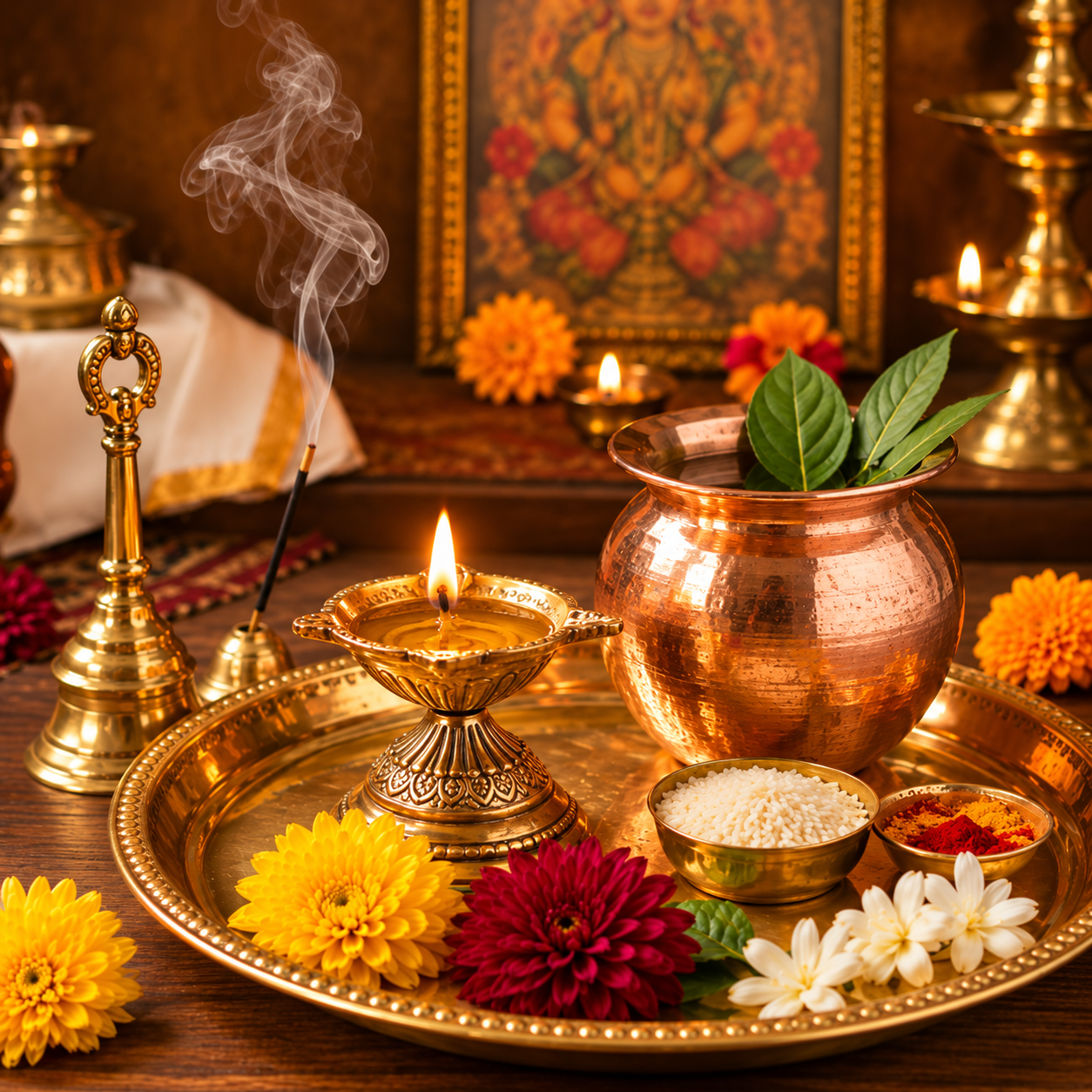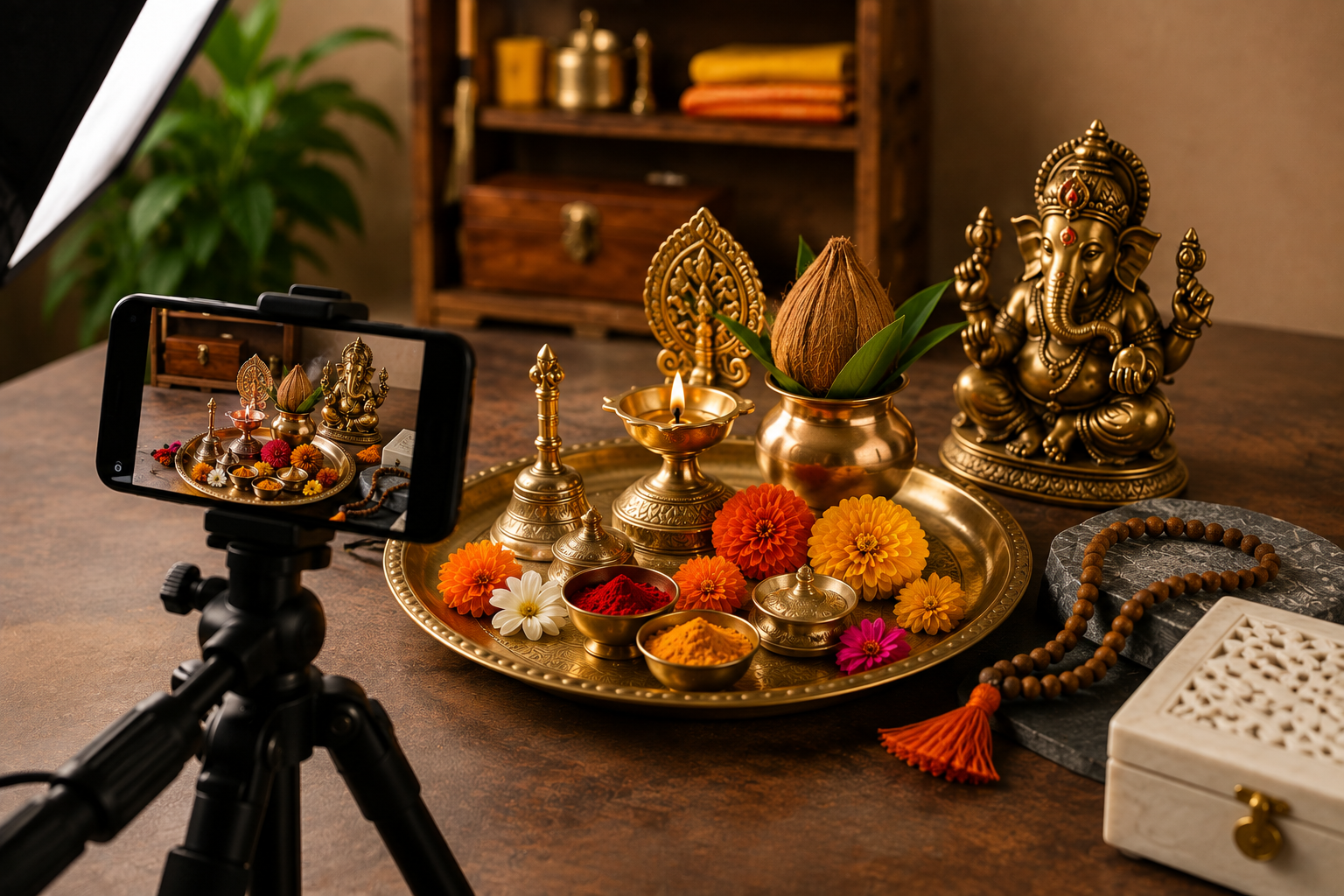



Complete Diwali Puja Samagri List for Lakshmi Puja
Complete Diwali Puja Samagri List for Lakshmi Puja
Diwali is a time to welcome prosperity, celebrate with family and create a peaceful atmosphere at home. One of the most important preparations is arranging the samagri for Lakshmi-Ganesh Puja. Having a Diwali Puja Samagri List ready in advance helps you organise everything without last-minute shopping or confusion.
The list below covers the common items used for Lakshmi Puja, including idols, diyas, tilak materials, flowers, prasad and aarti essentials. It also explains which items you can prepare at home, what you may need to purchase fresh and which additions depend on your family tradition. Whether you are organising your first home puja or following a familiar annual routine, this checklist will help you prepare with confidence.
Diwali Puja Samagri List at a Glance
If you want a quick overview, start with this Diwali Puja Items List. These are commonly used items for a traditional Lakshmi-Ganesh Puja at home. The exact requirements may differ according to your family's customs.
Puja item | Purpose |
Lakshmi and Ganesh idols or pictures | For the main worship |
Chowki and clean cloth | To prepare the worship space |
Kalash, water and coconut | For the setup, where customary |
For lighting lamps | |
For tilak and worship | |
Akshat (unbroken rice) and moli | For customary offerings and rituals |
Fresh flowers and garland | To decorate the altar and offer to the deities |
Incense, dhoop and camphor | For prayer and aarti, as used |
Aarti thali and bell | For the aarti |
Fruits, sweets and prasad | For offerings |
Coins or currency | For households that include wealth-related worship |
Quick tip: Check your existing puja supplies before buying anything new. Many reusable items, such as a bell, thali and kalash, can be used year after year.
Complete Lakshmi Puja Samagri List with Categories
This detailed Lakshmi Puja Samagri List groups the items according to their use, making it easier to prepare your shopping list. You do not need to purchase every item mentioned here. Choose what is appropriate for your household's puja.
1. Idols, Chowki and Kalash
Begin by preparing a clean and suitable space for worship. Keep the following items ready if they are part of your usual arrangement.
Lakshmi and Ganesh idols or pictures: These are commonly placed together for Diwali worship.
Chowki or small platform: A stable surface for placing the idols or pictures.
Clean cloth: A red, yellow or other traditional cloth to cover the chowki.
Kalash or lota: A vessel used for the customary water arrangement.
Clean water: For the kalash and other ritual purposes.
Mango leaves and coconut: Used in some traditional kalash arrangements.
Small asan: A clean seat or mat for the person performing the puja.
Wash reusable vessels beforehand and ensure the platform is steady. The arrangement of the idols and kalash can vary, so follow your family's established practice.
2. Tilak, Sacred Powders and Akshat
These materials are commonly kept in small bowls so they are easy to access during the puja.
Roli or kumkum: Used for tilak and other customary applications.
Haldi (turmeric): Used in traditional worship.
Chandan (sandalwood paste): Applied during puja according to custom.
Akshat: Unbroken rice grains used as an offering.
Moli or kalawa: A sacred thread used in certain rituals.
Supari (betel nut): Included in some traditional offerings.
You can place the powders and rice in separate bowls before the puja begins. This keeps the arrangement neat and prevents different materials from mixing.
3. Diya, Batti and Aarti Items
Lighting diyas is an important part of many Diwali celebrations. Keep the required lighting materials together before starting.
Clay or metal diyas
Cotton wicks or batti
Ghee or suitable diya oil
Matchbox or lighter
Incense sticks or agarbatti
Dhoop, if used
Camphor and a suitable holder, if used
Aarti thali
Puja bell
The number of diyas depends on your home's decoration and worship practices. Place lamps on stable, heat-resistant surfaces away from curtains, paper decorations and other flammable materials. Never leave a burning diya, incense stick or camphor unattended, and keep matches and lighters away from children.
4. Flowers, Leaves and Other Offerings
Flowers bring colour and freshness to the puja space. You can choose locally available seasonal flowers rather than searching for a particular variety at the last minute.
Keep these items ready as needed:
Fresh flowers for offerings
A flower garland for the idols or altar
Paan leaves, if customary
Mango leaves for the kalash, where used
Durva or other specific leaves if required by your family tradition
Lotus flowers and lotus seeds are also included in some households' Diwali worship. These are optional additions rather than universal requirements.
5. Bhog, Prasad and Wealth-Related Offerings
Food offerings are another part of many Lakshmi Puja traditions. Prepare only what your family normally offers and what you can serve fresh.
Common options include:
Fresh fruits such as bananas, apples or seasonal fruit
Homemade sweets or mithai
Mishri or batasha
Kheel-batashe, where customary
Dry fruits, if desired
Panchamrit ingredients, if used in your family's ritual
Coins or currency for customary offerings
Account books or business records for households that perform business-related worship
Keep edible offerings covered until needed. If you are preparing panchamrit or other perishable foods, use fresh ingredients and handle them hygienically.
Diwali Puja Thali Items and How to Arrange Them
A well-arranged thali makes the puja more convenient because the commonly used items stay within reach. The Diwali Puja Thali Items can be adjusted according to the space available and your family's ritual.
Include the following:
A small diya with its wick and fuel
Roli or kumkum
A small bowl of akshat
Fresh flowers or petals
Incense and a suitable holder
Camphor in an appropriate holder, if used
Small bowls for other offerings
A bell, if required
How to arrange the thali: Place the diya securely on one side and keep tilaks and rice in separate bowls. Arrange flowers and small offerings around them without overcrowding the plate. Keep any liquid offerings in stable containers, and place the matchbox or lighter nearby but away from the flame and children's reach.
If you have a reusable puja thali with small compartments, you can use it to keep the items organised. There is no need to buy a decorative set if a clean plate and suitable bowls already meet your needs.
Diwali Puja Essentials for a Simple Home Puja
Short on time or preparing for a small home puja? You can begin with these Diwali Puja Essentials and add other items according to your household's customs.
Lakshmi-Ganesh idols or pictures
A clean cloth or worship platform
A diya, cotton wick and ghee or oil
Kumkum or roli, haldi and rice
Flowers
Clean water
Fruit or sweets for the offering
Incense, if used in your practice
This shorter list helps you focus on the basic preparations without feeling overwhelmed by a long shopping list. Optional decorations and additional offerings should not become a reason to delay a simple, sincere puja. Follow your family's customary practices and consult a knowledgeable family member or priest if you need guidance on a specific ritual.
Optional Diwali Puja Samagri and Regional Variations
Diwali celebrations differ across families and regions. Some households include additional items based on their traditions, local customs or business practices.
These may include:
Lotus flowers or lotus seeds
Cowries or Gomti chakra
Kuber-related worship items
Additional grains or traditional offerings
Business account books and cash ledgers
Special sweets or regional prasad
These items are not necessary for every household. If you are following a particular family tradition, check its requirements before purchasing specialist materials. Otherwise, concentrate on the items you regularly use rather than buying unfamiliar products simply because they appear on a longer checklist.
What to Prepare at Home and What to Buy Fresh
One easy way to save time is to divide the shopping list into reusable supplies and items that are best purchased closer to the festival.
Prepare or check at home | Buy fresh when needed |
Flowers and garlands | |
Fruits | |
Kalash or lota | Fresh sweets or prasad |
Clean cloth for the chowki | Coconut, if required |
Fresh leaves, if used | |
Stored incense and suitable puja supplies | Other perishable offerings |
Before shopping, inspect your storage box for old supplies, damaged wicks, empty containers and items that have not been stored properly. Check that reusable vessels are clean and that powders, incense and other materials are still suitable for use.
Keep the complete checklist in one place, either on your phone or on paper. This small step makes it easier to finish the preparations without making several trips to the market.
Can You Use a Diwali Puja Samagri Kit?
Yes. A Diwali Puja Samagri Kit can be a convenient option if you want to collect several commonly used ritual supplies in one purchase rather than buying every packaged item separately.
Before choosing a kit, check its product description and contents. Some kits include items such as incense sticks, camphor, kumkum, turmeric, rice, betel leaves, supari and coconut, while the exact contents may vary. Fresh flowers, fruits, sweets and other household-specific requirements may still need to be arranged separately.
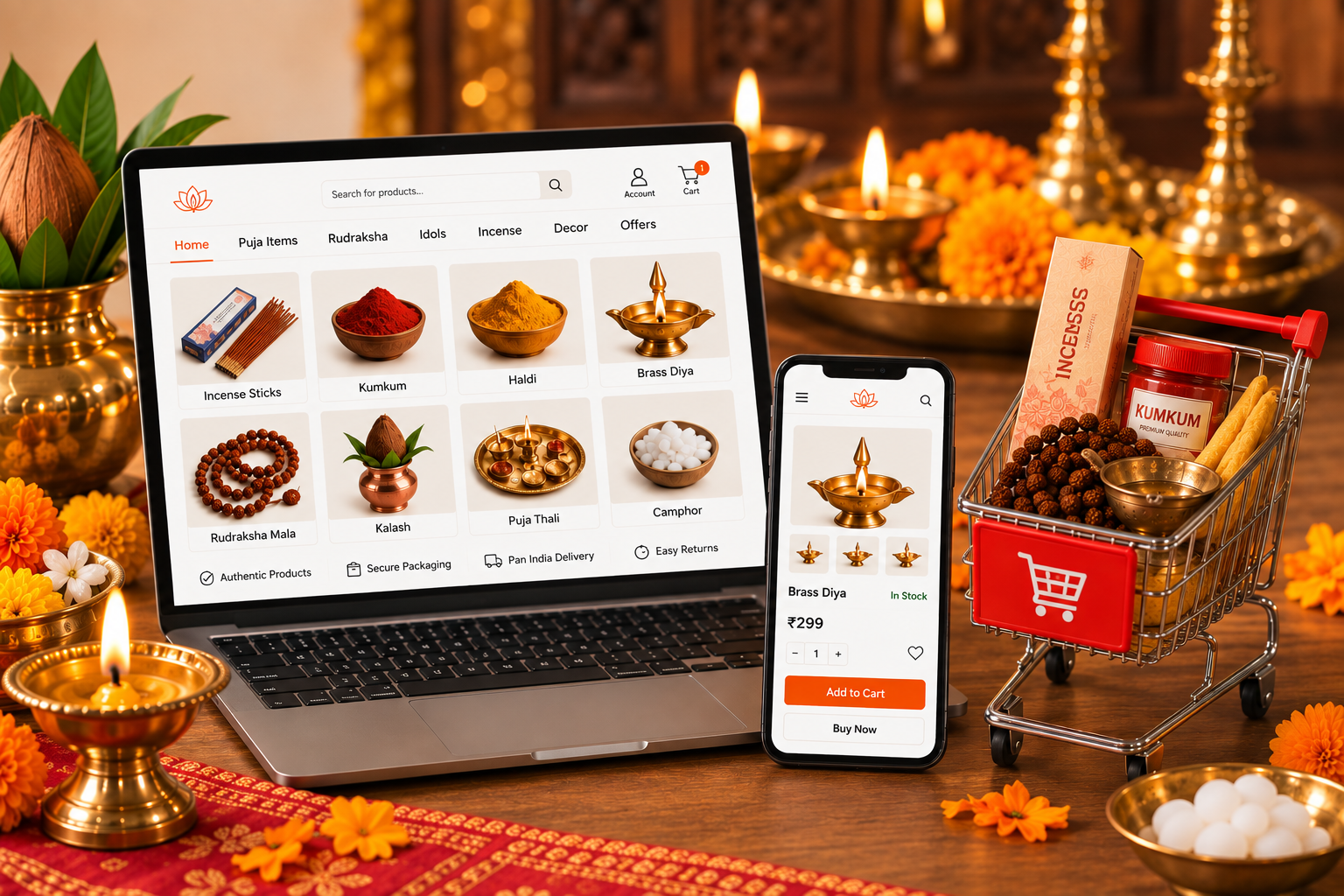
If you prefer to organise your preparations in advance, you can explore the Diwali Puja Samagri Kit on NamanKart. Review the current product details to confirm which items are included and whether you need any additional supplies.
A kit is an option, not a requirement. If you already have most of the essentials at home, purchasing only the missing items may be more practical.
How to Prepare the Samagri Before Puja
Once you have gathered everything, spend a little time organising the puja space. A simple preparation routine can make the occasion feel calmer and less rushed.
Clean the worship area: Wipe the platform and prepare a fresh cloth.
Wash reusable utensils: Clean the thali, bowls, bell and kalash, then dry them properly.
Sort the smaller items: Keep kumkum, haldi, rice and other powders in separate containers.
Arrange the diyas: Check that the lamps are stable and keep the wicks and fuel nearby.
Prepare the offerings: Wash the fruit, arrange the flowers and keep sweets covered.
Keep the checklist handy: Confirm that the items required by your family tradition are ready.
If your family follows a specific puja order or requires a particular set of items, verify those details with a knowledgeable source before the day. This checklist is intended to help with samagri preparation, not to replace guidance on the complete puja vidhi.
Conclusion: Keep Your Diwali Puja Checklist Ready
Remember that every household may follow a slightly different practice. Use this checklist as a practical guide, check what you already own and purchase only what you need. If collecting individual supplies feels inconvenient, you can also explore NamanKart's Diwali Puja Samagri Kit and check its current contents before ordering.
With a little planning, your preparations can be organised and your attention can remain on the celebration, prayers and time spent with loved ones.
Frequently Asked Questions
1. What is included in a Diwali Puja Samagri List?
A typical Diwali Puja Samagri List includes Lakshmi-Ganesh idols or pictures, a chowki, a clean cloth, diyas, cotton wicks, ghee or oil, kumkum, haldi, rice, flowers, incense, aarti items, fruits and sweets. A kalash, coconut, coins and other offerings may also be included according to family tradition.
2. What are the most important items required for Diwali Puja?
For a simple home puja, keep the deity images or idols, a clean worship space, a diya with its wick and fuel, basic tilak materials, rice, flowers, clean water and an offering such as fruit or sweets. Other items depend on the rituals followed in your household.
3. What items are needed for Lakshmi Puja at home?
Lakshmi Puja commonly involves images or idols of Goddess Lakshmi and Lord Ganesh, a chowki, diya supplies, kumkum, haldi, akshat, flowers, incense and offerings. Some families also prepare a kalash, coconut, sweets, coins or business account books. Check your family's customary requirements before shopping.
4. What should be included in a Diwali Puja Thali?
A Diwali Puja Thali can contain a diya, cotton wick and fuel, kumkum, akshat, flowers and small bowls for offerings. Incense, camphor in a suitable holder and a bell may also be included. Arrange everything securely, leaving enough space to handle the thali without spilling or disturbing the flame.
5. Can I perform Diwali Puja with basic essentials only?
Yes, you can prepare a simple home puja with the essentials appropriate to your family tradition. You do not need to purchase every decorative or optional item on a long checklist. Prepare the worship space, basic puja materials and offerings you normally use, and seek guidance if your household follows specific ritual requirements.
6. Should I buy a Diwali Puja Samagri Kit or collect items separately?
A Diwali Puja Samagri Kit may save preparation time by bringing commonly used packaged items together. Buying separately can be more practical if you already own most supplies or need only a few things. Compare the kit's current contents with your checklist before deciding, and remember that fresh offerings may still be needed.
7. Which Diwali puja items should be bought fresh?
Flowers, garlands, fruits, fresh sweets and perishable offerings are generally best arranged close to the puja. Coconut and leaves can also be purchased fresh when your household uses them. Reusable thalis, bells, kalash vessels and diya holders can usually be prepared in advance after cleaning and checking their condition.